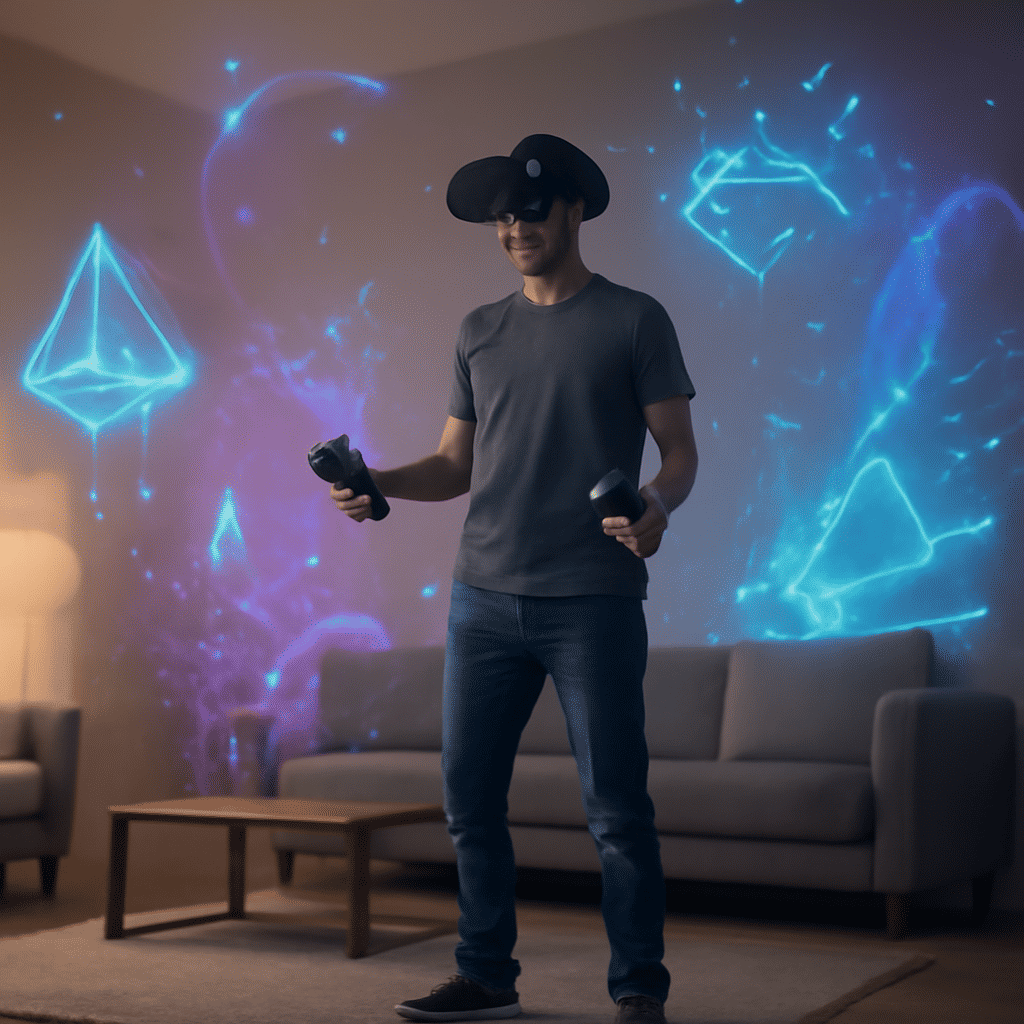
Virtual reality (VR) has rapidly transformed from a futuristic concept into an essential component of modern gaming and entertainment. Today, VR offers an unparalleled level of immersion and realism that transports users into captivating digital worlds, making the boundaries between the virtual and real worlds increasingly seamless.
At the heart of this revolution are state-of-the-art VR systems that combine cutting-edge technology with user-centric design. These systems offer gamers a truly immersive experience by integrating high-definition visuals, precise motion tracking, and spatial audio. Such features create a sense of presence—that feeling of "being there"—that is so genuine it's hard to differentiate the synthetic from the real.
The visual realism in VR is achieved through advanced display technologies and graphic rendering techniques. Modern VR headsets employ high-resolution displays and a wide field of view to ensure users find themselves deeply engrossed in every scene. Paired with powerful hardware that ensures smooth frame rates, these visuals prevent motion sickness and increase the user's comfort and enjoyment during extended play sessions.
Motion tracking is another critical element that enhances the VR experience. Using sensors and cameras, VR systems track the user's movements in real time, allowing for intuitive navigation and interaction within the virtual environment. This full-body engagement is a leap forward from traditional gaming, offering a way to explore and interact with worlds like never before. Gesture tracking and haptic feedback further enrich this experience, providing tactile sensations that mirror real-life interactions—whether it's feeling the tension of a bowstring or the vibration of a roaring engine.
Spatial audio is a crucial component that completes the VR immersion. By accurately simulating how sound naturally emanates from different directions, it enhances the sense of realism and helps gamers locate threats, allies, and objectives with instinctive precision. This three-dimensional soundscape engages the user's auditory senses, capturing the subtleties of a whispering breeze or the distant rumble of thunder.
Moreover, VR technology isn't just limited to enhancing gaming experiences. It is increasingly branching out into other fields, such as education, health, and design. VR enables virtual field trips to distant locations, offers safe yet practical training environments for medical professionals, and provides artists and designers with an entirely new medium for creating and sharing their work.
The social aspect of VR is another transformative feature, as it connects people across the globe, enabling them to share experiences in a vividly interactive setting. Whether it's collaborating on a project, playing a cooperative game, or simply sharing a virtual space, VR fosters a sense of togetherness that transcends physical boundaries.
As VR technology continues to evolve, its systems will likely become more accessible and integrated into everyday life. The enhancement of wireless systems, ergonomics, and portability will further define the next generation of VR platforms, making immersive experiences available anytime and anywhere.
In conclusion, virtual reality is revolutionizing the gaming industry by offering immersion and realism that was once deemed impossible. As the technology progresses, its applications across various sectors will continue to expand, heralding a future where the virtual seamlessly integrates with the real, creating possibilities limited only by imagination.